

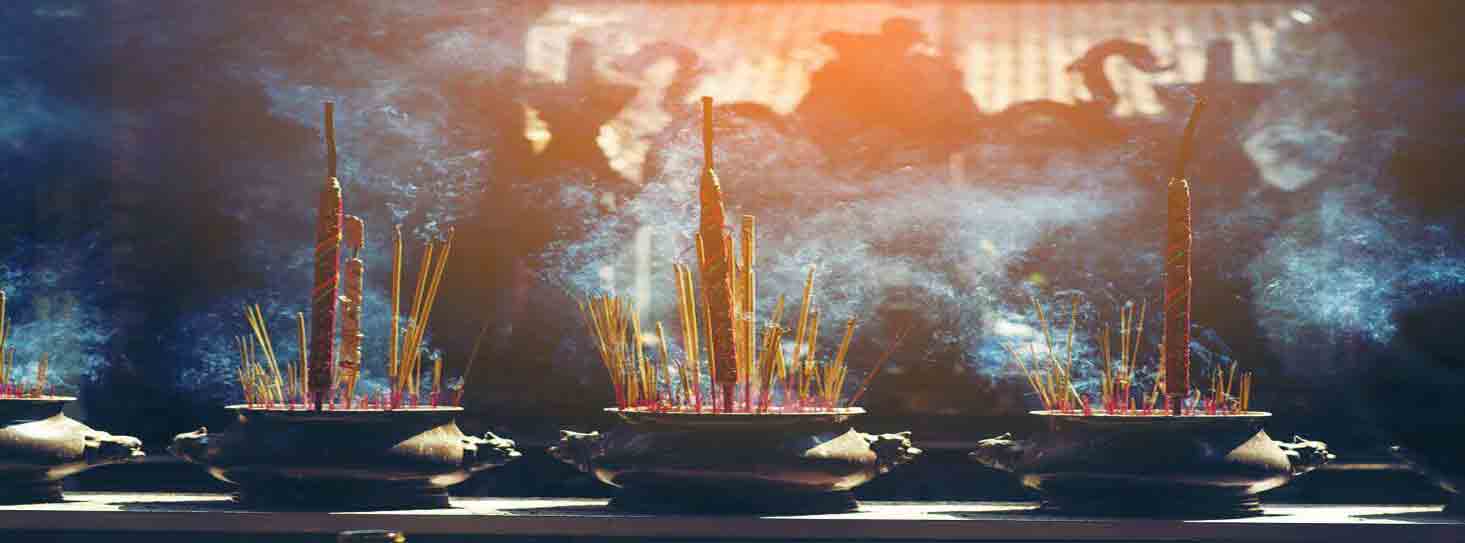
For many people, the aromatic scent of incense sticks is firmly linked to rituals of relaxation, meditation or simply creating a cosy home. At the same time, one question persists: are incense sticks actually harmful to health? We take an objective look at the available information, explain what these concerns are based on, and give practical advice for a mindful approach.
Note: This article does not replace medical advice. It summarises generally accessible knowledge and serves as guidance, not diagnosis or treatment.
What exactly are incense sticks?
Incense sticks usually consist of a thin bamboo core coated with a mixture of charcoal powder, binders, resins, herbs and fragrance oils. When lit, this mixture slowly smoulders and releases an aromatic smoke. Incense sticks are traditionally used for meditation, yoga and spiritual rituals, but increasingly also simply to give rooms a pleasant scent or to mask odours.
What ingredients do incense sticks contain?
It's worth taking a closer look here, as the composition differs considerably depending on the manufacturing method:
- Conventional incense sticks are often recognisable by their dark, black colour. They frequently contain synthetic fragrances, which are not toxic as such, but are also not of natural origin.
- Masala incense sticks, on the other hand, are made from a paste containing pure essential oils, herbs, resins and flower components. Not every fragrance can be achieved this way, but the scent often appears more authentic and natural.
Anyone who values traceable, natural ingredients when burning incense is generally well advised to choose high-quality masala incense sticks. As a family business, at Luxflair we have worked directly with a partner manufactory in Bangalore, southern India, for over ten years, visit the production site regularly, and develop fragrances together with them – for us, this is an important part of being able to trace the origin and composition of our incense sticks.
What happens when incense sticks burn – and where do the possible risks lie?
As with any combustion process, smoke and fine particulate matter are produced when incense sticks burn. According to general knowledge: in small amounts and with occasional use, exposure is usually unproblematic. However, if incense is burned frequently, over long periods and in poorly ventilated rooms, the concentration of fine particulate matter in indoor air can increase.
Fine particles can penetrate deep into the airways when inhaled. In sensitive individuals, such as people with asthma or other respiratory conditions, this can sometimes cause irritation. Volatile organic compounds that may arise during combustion are also occasionally discussed in this context. However, no generally reliable statements can be made about the extent to which this is actually relevant to health with typical household use – individual exposure depends heavily on quantity, frequency, room size and ventilation.
As a rule of thumb: less is more, good ventilation is better, and when in doubt, it's best to burn incense outdoors or in well-ventilated rooms.
Burning incense in everyday life: when is caution advised?
Incense sticks have been used for centuries across different cultures – as a firm part of rituals, for meditation, or simply to give rooms a pleasant scent. With occasional, moderate use, they are generally considered harmless.
The situation is somewhat different when incense is burned daily and over extended periods in small, barely ventilated rooms. Here, smoke and fine particulate matter can accumulate more strongly. Particularly sensitive individuals – such as people with respiratory conditions, pregnant women, small children or pets – should be more cautious in such situations or pay special attention to open windows or shorter burning times.
Overview of advantages
- Pleasant, relaxing atmosphere in the room
- Accompaniment for meditation, yoga or mindfulness rituals
- Wide range of fragrances and traditions
- With masala incense sticks: natural fragrance composition
Overview of possible disadvantages
- Generation of fine particulate matter and smoke when burning
- Possible irritation of the airways or mucous membranes with intensive, prolonged use
- Not equally suitable for every group of people (e.g. those with respiratory conditions)
- Fire risk if handled improperly
Burning incense safely: practical tips
- Ventilate well: Burn incense with a window open or outdoors where possible, especially with more frequent use.
- Keep an eye on quantity and frequency: An occasional stick is quite different from burning incense daily for several hours in small rooms.
- Pay attention to quality: High-quality, traceably produced incense sticks – such as masala products with natural ingredients – can be a conscious choice.
- Use a secure holder: Always use a suitable incense burner or holder so that ash is safely caught.
- Never leave unattended: Smouldering sticks should never burn without supervision and should be fully extinguished before leaving the room.
- Consider sensitive individuals: With respiratory conditions, during pregnancy, or in households with small children and pets, it's better to burn incense more sparingly and with particularly good ventilation.
Our conclusion
Whether incense sticks are harmful to health cannot be answered with a simple yes or no. Quantity, frequency, room size and ventilation, as well as individual sensitivity, are decisive factors. With mindful, moderate use in well-ventilated rooms, burning incense is generally considered a harmless ritual with a long tradition for most people. Those who additionally pay attention to natural ingredients, for example with high-quality masala incense sticks, are making a conscious, traceable choice. As a family business with a direct link to our manufactory in India, it is important to us that you can decide for yourself what and how much incense you wish to burn.
Note: This translation was created automatically using AI.