
What defines Indian incense sticks
Indian incense sticks are among the best-known incense products worldwide. Their reputation is based on a long tradition and a manufacturing method that differs significantly from industrially produced alternatives. Anyone wishing to understand why these sticks have such varied fragrances and how they are made should take a look at their origin and production.
Traditional origin and significance
In India, burning incense has been part of everyday life for many generations and is practised in various contexts – from ritual occasions to fragrancing rooms in private settings. This long tradition has produced enormous knowledge of fragrance combinations and production techniques, which is still passed on in many workshops today.
Difference from incense sticks from other countries
Compared to incense from other regions, Indian incense sticks are often notable for the complexity of their fragrances. This is mainly due to the use of resins, woods and plant oils combined in specific recipes. Other production traditions sometimes rely on different base materials or techniques, which can result in different fragrance characters and burning behaviour.
The two main types: masala and charcoal incense sticks
Essentially, Indian incense sticks can be divided into two production methods, which differ both in appearance and fragrance profile.
Masala sticks: fragrance paste with essential oils
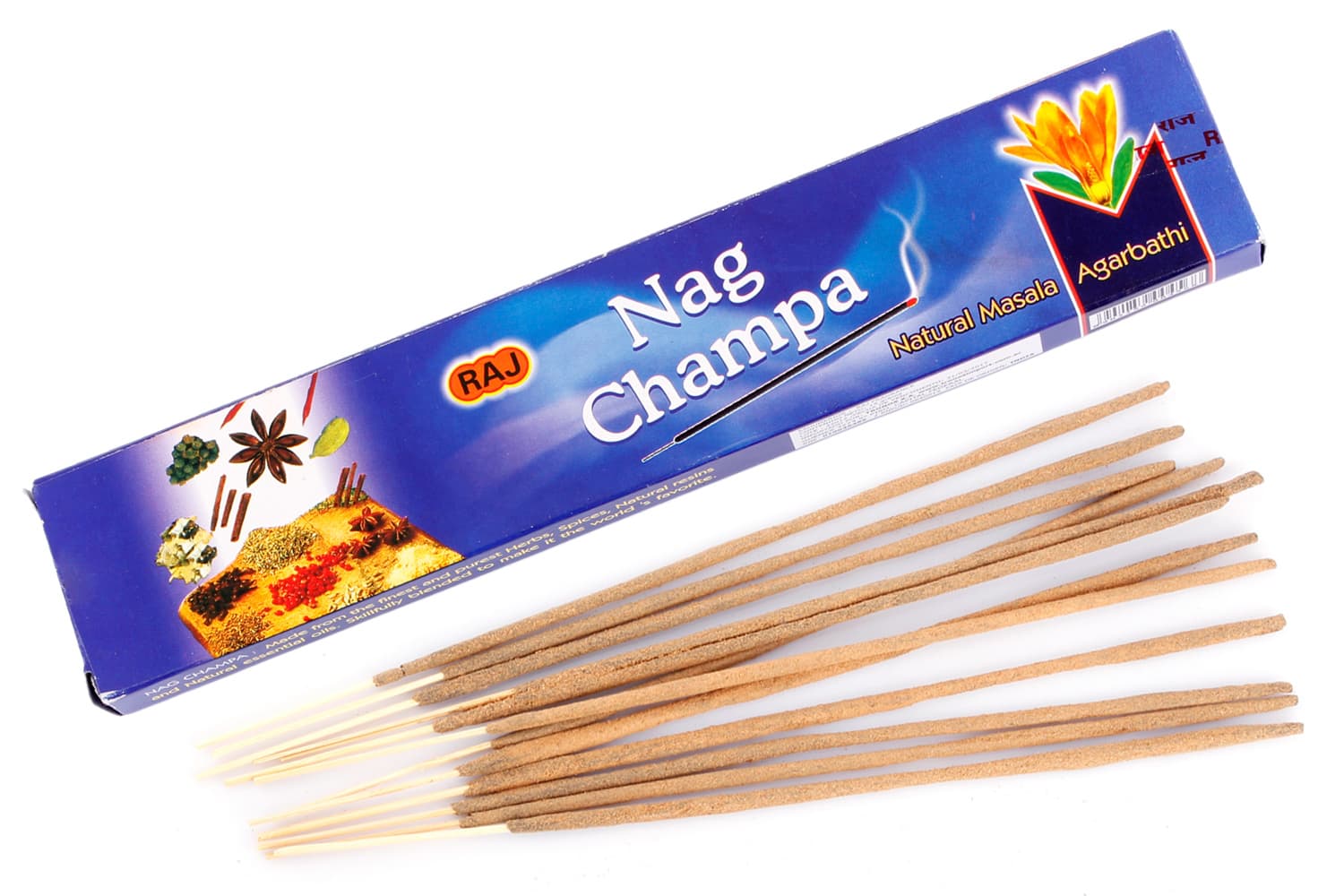
For masala incense sticks, a paste made from various ingredients such as resins, woods and binders is shaped directly around a thin bamboo stick. This technique enables complex, often earthy and resinous fragrance notes.